Agricultural Trailer Manufacturers
For companies manufacturing in series or on a project basis, product architecture, technical documentation and conformity of production are assessed within the same framework.

A successful agricultural trailer is not defined by its mechanical design alone. Technical requirements, documentation, production planning and conformity procedures must be considered as a whole. Anemon Engineering supports agricultural trailer manufacturers throughout the type-approval process.
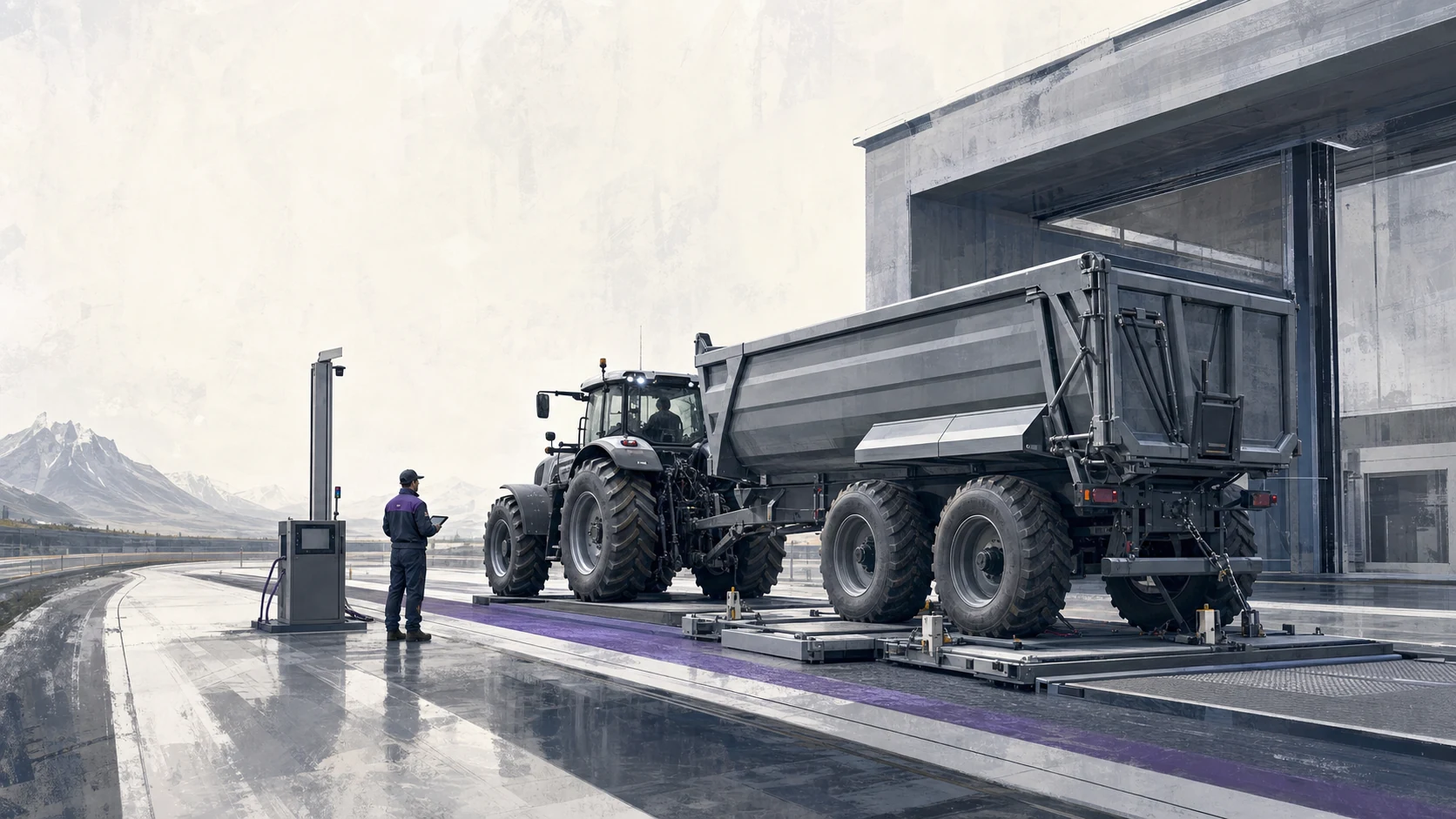
Agricultural trailers are essential vehicles for transporting crops, equipment, materials and other loads at different stages of agricultural production. Their broad range of uses creates considerable product diversity: tipping trailers, flatbeds, multipurpose solutions and special-purpose trailers cannot all be treated in the same way.
For the manufacturer, a successful agricultural trailer project requires more than a robust chassis or high load capacity. Product definition, vehicle category, coupling arrangement, component selection, manufacturing method and traceability must be developed as an integrated system.
Agricultural trailer type approval therefore involves much more than summarising regulatory texts. Product-development decisions must be aligned with the technical file and conformity-of-production requirements.
For companies manufacturing in series or on a project basis, product architecture, technical documentation and conformity of production are assessed within the same framework.
Companies entering agricultural trailer production for the first time need to establish the product family, manufacturing infrastructure and documentation approach correctly from the outset.
For manufacturers preparing to enter new markets, technical-file quality, production discipline and product consistency are important elements of commercial readiness.
Projects outside standard trailer configurations are assessed individually according to their intended use, transport scenario and technical limits.
For companies developing agricultural transport equipment, trailer architecture, coupling arrangements and manufacturing repeatability are considered together.
In low-volume manufacturing, documentation, variant management and production records must be made particularly clear to support a successful approval process.
Starting before dimensions, mass data, coupling points and component choices are defined increases the likelihood of revisions.
If shop-floor implementation cannot be traced through drawings, descriptions and supporting documents, the technical file remains weak.
When type-approval preparation begins only after the product is complete, design decisions may have to be reversed or reworked.
If variants, component substitutions and production updates are not controlled, the approval scope can diverge from the product actually manufactured.
A compliant prototype is not enough; series production requires a control approach that preserves the same technical characteristics in every unit.
If the target market, approval route and product-family strategy are not considered early, commercial planning and technical processes can become misaligned.
Whether tipping, flatbed, multipurpose or special-purpose, the trailer architecture must be defined from the outset, with the product family and variants aligned to the technical scope.
The R-category classification must be assessed for each project in relation to intended use, load capacity, speed characteristics and technical definition.
Mass, dimensions, coupling arrangement, lighting, braking, marking and structural decisions must not be treated separately from production planning.
Drawings, product descriptions, component information, technical data and supporting documents must all describe the same product configuration.
The production line, supplier structure, quality-control points and record system must be designed to remain effective after certification.
The COP approach and traceability system should be established from the outset so the approved product can continue to be manufactured in the same technical configuration.
For agricultural trailer projects, the technical file is the principal reference showing how the product is designed, manufactured and technically assessed. Drawings, product descriptions, component data and production records must all refer to the same product.
A robust technical file is not merely a collection of documents prepared for an application. It is also a practical tool for managing the product family, variants and continuity of production.
The intended use, technical maturity, production plan, target market and documentation readiness are reviewed together before the application begins.
Load capacity, coupling structure, components, variants, manufacturing method and operating conditions are examined from a technical perspective.
A practical roadmap for national or EU type approval is developed according to production volume, product family and target-market expectations.
Drawings, technical descriptions, product data, component information and supporting documents are organised into a consistent technical file.
Revisions, product changes, supplier information and application documents are managed within a traceable filing structure.
Application steps, authority communications, technical explanations and document flow are managed for the manufacturer in a planned and controlled manner.
Production control points, records, traceability and product continuity are prepared to support the period after certification.
Technical support is provided for new variants, product updates, changes in target markets and revisions to the documentation.
The objective of agricultural trailer type approval is not simply to prepare a single sample for technical assessment. Products manufactured later must retain the same technical configuration, control discipline and traceability.
Conformity of production is linked to quality-control points, production records, supplier monitoring, component changes and variant management. If this structure is not established from the outset, product continuity may weaken after certification.
Anemon Engineering assesses COP against the manufacturer’s actual production structure and plans the measures needed to keep the manufactured product aligned with the technical file.
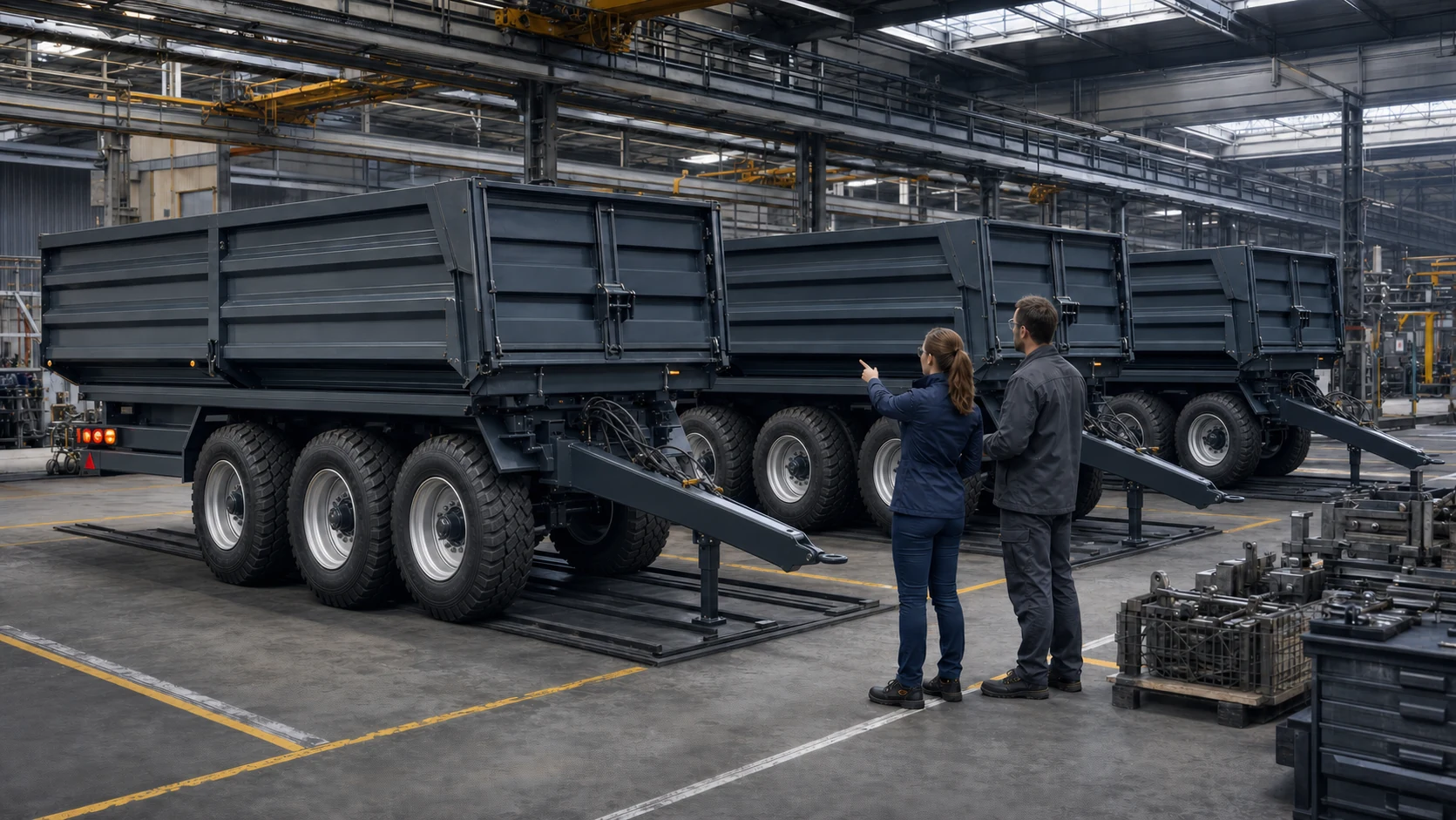
Agricultural trailer projects encompass very different product types. A tipping trailer, flatbed, special-purpose transport solution and low-volume project do not present the same technical risks.
Customer expectations, target markets, load capacity, component architecture, product variants and manufacturing infrastructure require different decisions in every project. Experience makes it possible to identify these differences early and begin with the right technical questions.
For the manufacturer, this approach means a clearer roadmap, more consistent documentation and a more manageable type-approval process.
For general-purpose agricultural trailers, capacity, body structure, coupling arrangement, manufacturing method and product-family scope are assessed together.
For tipping configurations, load capacity, body movement, hydraulic-system effects, safety measures and technical documentation require particularly careful planning.
For products intended for multiple operating scenarios, variant management, technical limits and production records must be defined at an early stage.
For transport solutions outside standard product families, the intended use, field conditions and technical evidence are developed specifically for the project.
In low-volume or customer-specific manufacturing, documentation, traceability and product repeatability are decisive to the success of the process.
The product family, target market, production volume and available technical data are assessed together.
Drawings, descriptions, component data and production records are prepared for the application.
Process steps, authority communications and required technical explanations are managed systematically.
After certification, product changes, variants and conformity of production continue to be monitored.
For agricultural trailer manufacturers, the technical file, conformity of production and target-market preparation are central to the process.
Agricultural trailer type approval is the certification process used to assess a trailer against its defined technical configuration, documentation and conformity-of-production arrangements.
Manufacturers must manage product development, the technical file, application preparation, conformity of production and target-market requirements simultaneously. Technical support keeps these areas aligned.
The R category covers trailers designed for use with agricultural and forestry tractors. The applicable scope and subcategory must be determined from the product’s technical characteristics.
The technical file is the principal record showing how the product is manufactured and assessed through its definition, drawings, technical descriptions, supporting evidence and traceability records.
Yes. For new manufacturers, early planning of product architecture, manufacturing infrastructure, quality arrangements and documentation makes the process more predictable.
After certification, products with the same technical characteristics must continue to be manufactured consistently. Conformity of production provides the control framework for that continuity.
For exporters, product consistency, technical-file quality, traceability and target-market requirements are important elements of commercial readiness.
Planning should begin while the product architecture and manufacturing decisions are taking shape, not after the product is complete. Late preparation can increase the risk of revision and delay.
Yes. Project-specific technical assessments can be provided for agricultural trailers, special-purpose trailers, agricultural transport equipment and related product families.
Anemon Engineering provides preliminary assessment, product analysis, type-approval strategy, technical-file preparation, documentation management, application support, conformity-of-production preparation and post-certification assistance.
For low-volume manufacturers, production capacity, documentation maturity and variant management require particular attention. The process must reflect the realities of both the product and its manufacture.
Common problems include late preparation of technical data, discrepancies between drawings and production, untracked product changes and failure to establish conformity-of-production arrangements from the outset.
For agricultural trailer manufacturers, the type-approval process must bring product-development decisions and production discipline into the same framework. Anemon Engineering manages technical analysis, file preparation, the application, conformity of production and post-certification changes as one connected process.
This approach prepares the manufacturer not only for the current application, but also for future variants, new target markets and sustainable production. Throughout the project, the aim is to make technical decisions clearer, traceable and easier to manage.
Together, we can plan the technical support required for agricultural trailer production and type approval.