New Product Development
Early technical decisions in the development of a vehicle or component directly affect product cost, testing needs, target-market strategy and type-approval preparation. Consultancy brings greater control to those decisions.
Technical decisions made during vehicle development and homologation directly affect project cost, timing and outcome. Anemon Engineering provides engineering and consultancy support so manufacturers can make better-informed technical, regulatory and operational decisions.
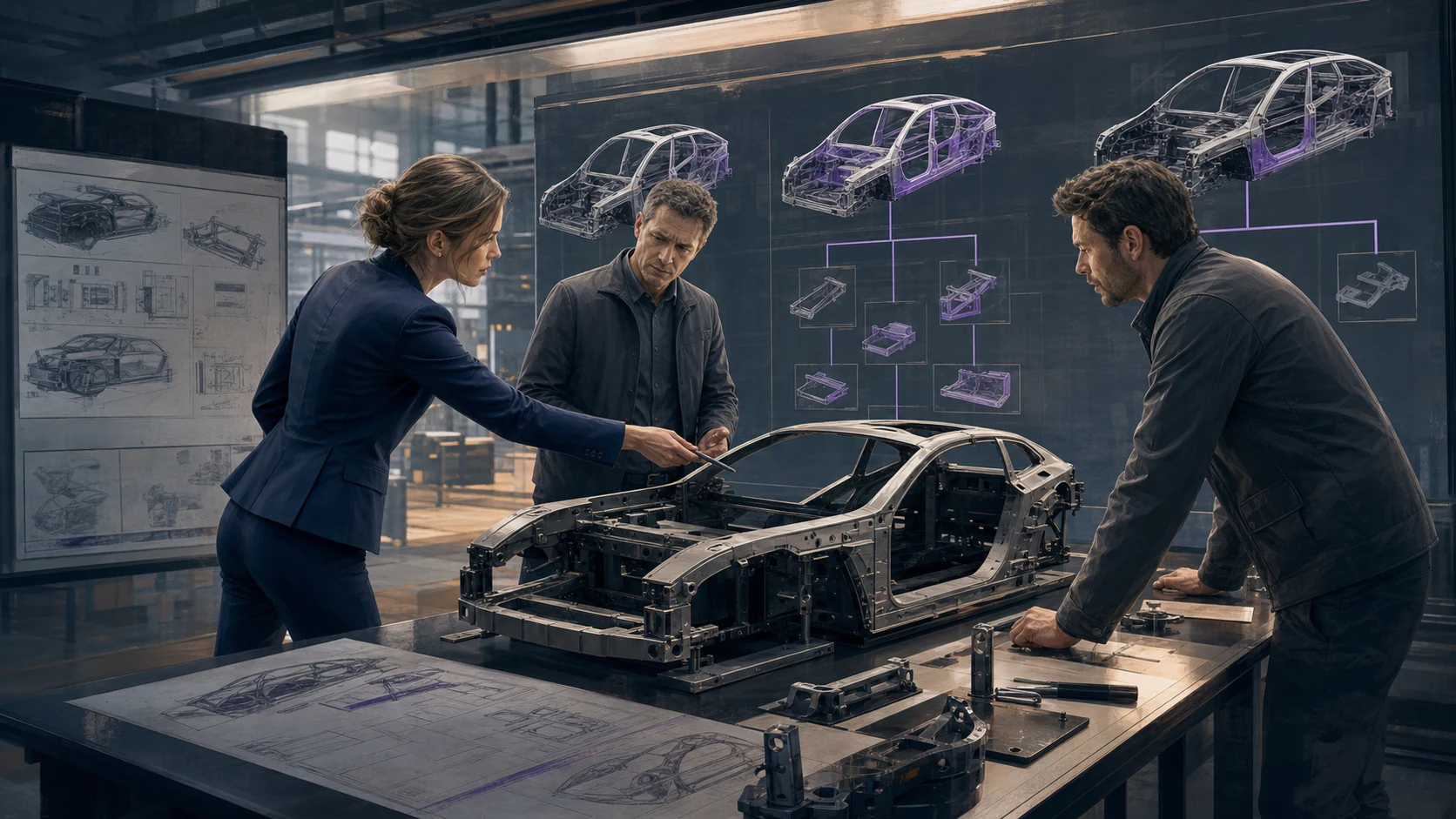
Homologation and type approval are often treated as documentation tasks to be addressed at the end of a project. In reality, decisions on design, components, category, production and target market define the compliance route from the earliest stage. Technical consultancy is therefore about making the right decisions at the right time, rather than correcting avoidable problems later.
Documentation alone is not enough. A strong technical file requires product architecture, technical requirements, the test plan, conformity of production and application strategy to be considered together. Anemon Engineering supports manufacturers not only with documentation, but also with product development, regulatory alignment, technical roadmaps and decision support.
This approach helps manufacturers identify risks before committing investment, position products for the intended market and plan homologation with greater predictability.
Early technical decisions in the development of a vehicle or component directly affect product cost, testing needs, target-market strategy and type-approval preparation. Consultancy brings greater control to those decisions.
A change of target market can alter technical requirements, documentation expectations, data structures and the approach to conformity of production. Manufacturers should define the compliance route before market entry.
Technical revisions to an existing product may affect GSR II, eCoC, COP or the type-approval scope. Regulatory and engineering effects should be assessed before changes are implemented.
Vehicle conversion is more than physical installation work. Project risk is reduced when the base vehicle, intended use, equipment scope, mass effects and documentation are planned together.
A sound type-approval strategy can only be established by considering vehicle category, technical documentation, testing, product variants and the production model as one system.
Production discipline, traceability, quality arrangements and change management should be designed early to maintain compliance after approval.
The intended use, target market, technical capability and production model are assessed together to support better decisions at project launch.
Determining the technical framework applicable to a vehicle or component is fundamental to its testing, documentation and type-approval strategy.
The regulatory requirements relevant to the target market, vehicle class, production volume and product function are assessed for the specific project.
Dimensions, mass, system safety, electronic equipment, GSR II implications and conformity evidence are considered alongside product-development decisions.
EU type approval, national type approval, series production, series conversion and multi-stage routes are matched to the technical reality of the product.
The production structure, quality discipline, traceability, COP preparation and supplier effects are incorporated into the technical roadmap.
The technical file, test plan, data structures, application stages and authority communications are arranged in a practical sequence.
Technical risks, cost implications, revision scenarios and process bottlenecks that might otherwise emerge late are made visible at an early stage.
A product may be commercially attractive, but if it conflicts with technical requirements, expensive revisions can arise as development progresses.
When type-approval and compliance requirements are addressed only at the end, design, component and production decisions may need to be reconsidered.
If vehicle category, target market, testing needs and conformity of production are not analysed adequately, the process becomes uncertain and costly.
If target-market requirements are not considered during development, a product may be commercially suitable for the market but not ready for approval.
If the technical file does not reflect the product as built, even correct engineering can appear weak during assessment.
Where the product, documentation and production structure are misaligned, revisions affect not only the file, but also the product and the project plan.
The product concept, current technical architecture, target market, production model and available documentation are reviewed together.
Vehicle category, system requirements, testing needs, GSR II implications and the required evidence structure are clarified.
The compliance steps potentially required for the target market and selected application route are evaluated.
Technical decisions, likely revisions and process bottlenecks that could create cost if discovered late are identified.
Product development, technical documentation, testing, application and conformity-of-production activities are arranged in a workable sequence.
Planned technical activities, documentation, authority communications and change requirements are followed throughout the process.
A type-approval strategy is developed by considering vehicle category, target market, application route, product variants and technical-file requirements together.
Technical requirements, conformity evidence, test planning and process stages are addressed early from a homologation perspective.
The product concept, vehicle design, component selection, system layout and target-market requirements are integrated into development decisions.
COP, traceability, production consistency, quality discipline and change management are designed around the manufacturer’s operating structure.
The project-specific effects of GSR II systems on the product, type approval and technical documentation are assessed.
The eCoC data structure, Certificate of Conformity content, type-approval data and production flow are organised as one technical process.
The alignment of existing or new products with the target market, technical requirements and manufacturing reality is assessed.
The technical file, drawings, calculations, supporting evidence and revision management are structured to support the overall process.
For caravan manufacturers, product architecture, mass, layout, technical documentation, conformity of production and the type-approval roadmap are assessed together.
For trailer projects, category, chassis, braking, lighting, variants and production processes form part of the technical strategy.
For agricultural trailers, intended use, capacity, coupling components, production model and conformity evidence are assessed for the specific project.
For component manufacturers, product function, effects on the vehicle, technical documentation and supplier relationships become central considerations.
For special-purpose vehicles, the operational function, equipment scope, bodywork effects and certification route are evaluated in one plan.
For new manufacturers, aligning the product concept, technical requirements and investment decisions at an early stage is critical.
For vehicle converters, conversion scope, repeatability, technical documentation and the process plan are structured together.
For bodybuilders, the relationship with the base vehicle, second-stage responsibilities, technical changes and conformity of production are considered as one system.
Different vehicle categories, production models and approval routes cannot be managed through one generic consultancy approach. A caravan manufacturer’s product-development risk differs from a component manufacturer’s evidence needs or a trailer manufacturer’s conformity-of-production priorities.
Experience means recognising those differences early and offering manufacturers practical decision options. Anemon Engineering brings vehicle development, type approval, technical documentation, GSR II, eCoC and COP together within the project context, adding technical depth to the decision-making process.

The project is assessed not merely as a documentation requirement, but in terms of product development and actual manufacture.
Experience across different vehicle categories, production models and approval routes is applied to project decisions.
GSR II, eCoC, COP, EU type approval and national type approval are interpreted in relation to the project objectives.
Technical decisions, documentation, application stages and revision needs are followed through a planned workflow.
Practical technical recommendations are developed with regard to shop-floor implementation, production capacity and commercial objectives.
Pre-certification decisions, the application process and post-approval change management are supported through the same technical knowledge base.
Project risks can be managed earlier when technical decisions, product development and homologation are planned together.
Engineering consultancy delivers the greatest value during the product-concept, technical-definition, target-market and investment-decision stages. The earlier the process begins, the sooner technical risks become visible.
Yes. Vehicle category, technical requirements, testing needs, documentation structure, conformity of production and type-approval strategy can be assessed together during new product development.
Yes. Pre-homologation consultancy helps product decisions remain aligned with compliance requirements and reduces the risk of late revisions.
Anemon Engineering can support product architecture, vehicle development, technical documentation, regulatory alignment and conformity of production during the development stage.
Yes. Applicable regulatory and compliance requirements are assessed for each project according to target market, vehicle category, product function and production model.
Yes. EU type approval, national type approval, series production, series conversion, multi-stage approval, COP, GSR II and eCoC can be planned strategically around the product objectives.
Support can cover product development, layout, mass, technical documentation, test planning, conformity of production and type-approval preparation.
For component manufacturers, product function, technical evidence, alignment with vehicle manufacturers, supporting documentation and target-market requirements can be assessed.
Yes. The effects of GSR II requirements on the product, system architecture, type approval, technical file and production process can be assessed for the specific project.
Yes. The relationships between the eCoC data structure, Certificate of Conformity information, type-approval data and production flow can be planned technically.
Yes. For new manufacturers, it is especially important to align technical decisions, investment planning and product development with homologation requirements.
Anemon Engineering provides engineering consultancy, homologation consultancy, type-approval strategy, technical documentation, product compliance, conformity of production, GSR II, eCoC and project-management support.
Together, we can plan the engineering support required for vehicle development, homologation and technical decision-making.
Plan the transition through regulation, data and submission workflows.
Prepare for the 29 November 2026 eCoC transition: scope, IVI 2.0 data, NAP and VCA submission, digital signatures, validation and rollout planning.
Understand IVI 2.0 XML, eCoC data sources, XSD and business-rule validation, type-variant-version matching and integration options.
Follow the full eCoC process from IVI creation and signing to EUCARIS/NAP or VCA submission, responses, rejection, correction and resubmission.