Series-Conversion Type-Approval

A dependable technical partner for your vehicle-conversion projects.

Converting vehicles for different uses requires technical assessment, documentation, conformity and process management to be handled together. Anemon Engineering provides end-to-end support to manufacturers and bodybuilders in series-conversion type-approval projects.

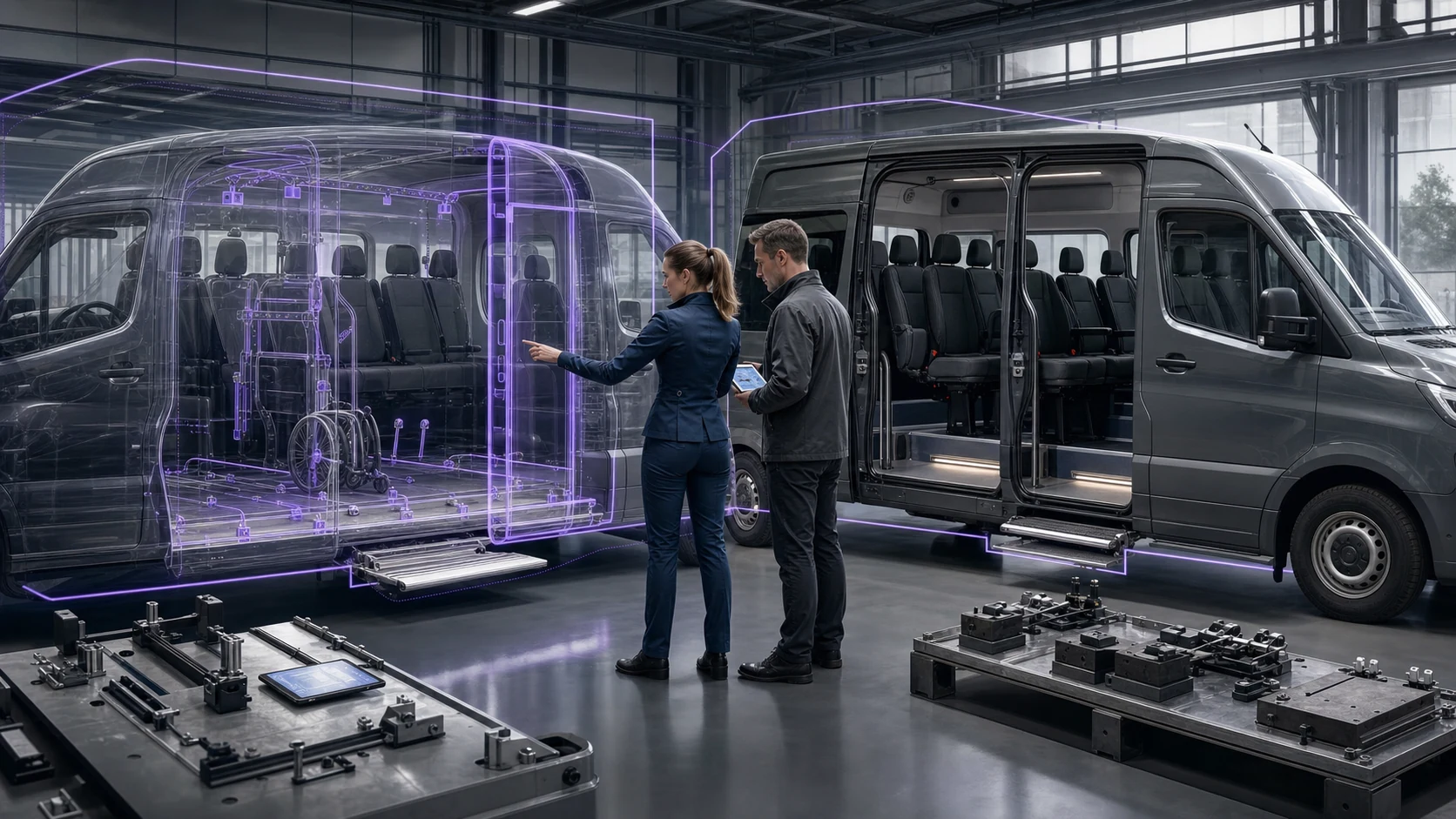
Mounting coordinates and repeatability of an accessible minibus conversion across two vehicles in series-modification type approval

A systematic, sustainable approach to vehicle-conversion projects.

For vehicle converters, series-conversion type-approval is not merely an administrative certificate. The same conversion must be applied consistently across multiple vehicles, the technical file must reflect actual production, and the application must follow the correct approval scope.

Each vehicle type has different technical limits across M2 conversions, ambulances, hearses, caravans, special-purpose vehicles and bodywork projects. A sustainable series-conversion process requires vehicle category, intended use, equipment layout, structural effects, weight distribution and supporting evidence to be considered together.

For series-conversion projects under the AİTM framework, Anemon Engineering provides the technical coordination manufacturers need, from the initial conversion concept and technical file through application management and post-approval change control.

Technical processes extend beyond implementation.

Incomplete Technical Planning

When a conversion is treated as something to resolve only during installation, technical limits are identified too late. Vehicle category, equipment layout, weight effects and production repeatability must be assessed at the outset of a series-conversion approval project.

Incorrect Vehicle Classification

In M2 conversions, caravans, ambulances and special-purpose vehicle projects, vehicle classification determines the foundation of the process. An incorrect starting point may require the technical file and application strategy to be rebuilt.

Insufficient Documentation

If drawings, calculations, supporting evidence and traceability records are unclear, demonstrating technical consistency becomes difficult. The technical file is the backbone of certification.

Late-Started Processes

Starting approval preparation only after the conversion is complete often increases the need for revisions. When approval and production are planned together, the process becomes more predictable.

Revision Requirements

If implementation and documentation do not match, the project may require reassessment, directly affecting time, cost and production planning.

Conformity Issues

After conversion, systems, equipment and structural changes must remain technically consistent with the vehicle’s intended use. Conformity issues can delay or obstruct approval.

Experience across different conversion projects.

M2 Vehicle Conversions

M2 conversion projects require seating layout, passenger capacity, vehicle category, weight effects and interior arrangement to be assessed together. The conversion scope must correspond exactly with the technical file. Anemon Engineering establishes the technical roadmap from pre-application analysis through certification.

Ambulance Projects

Ambulance projects differ from conventional vehicle conversions because of their specialised equipment layout and intended use. Medical equipment, electrical systems, restraint solutions, interior arrangement and vehicle category must be assessed as a whole. Technical consistency and disciplined documentation are essential to keeping certification predictable.

Hearse Projects

Hearse projects require coordinated planning of the interior, transport equipment, restraint details, effects on the vehicle body and the technical configuration required by the intended use. For series-conversion approval, drawings and supporting documents must clearly demonstrate that the same conversion can be repeated consistently.

Caravan Projects

Caravan projects require the interior layout, equipment restraints, weight distribution, electrical and water installations and base-vehicle characteristics to be assessed together. The technical file demonstrates that the conversion is coherent not only visually but also from an engineering perspective.

Special-Purpose Vehicles

Special-purpose vehicle projects may involve different equipment, body layouts and technical requirements depending on the operating scenario. No single template suits every project; vehicle function, conversion scope and production conditions must be considered together. Early technical analysis is therefore one of the most important steps.

Bodywork Applications

Bodywork projects require clear responsibility, technical boundaries and implementation details between the base vehicle and final product. Multi-stage type-approval, series conversion and individual vehicle engineering may overlap in some projects. The correct application route avoids unnecessary revisions.

We do not apply the same template to every project.

Production conditions, vehicle category and implementation limits vary between conversion projects. A caravan manufacturer’s technical-file requirements and project risks differ materially from those of an ambulance or hearse manufacturer.

A series-conversion approval should therefore begin with a clear understanding of the project’s technical character. Conversion scope, production repeatability, conformity evidence and application strategy must be built on that analysis.

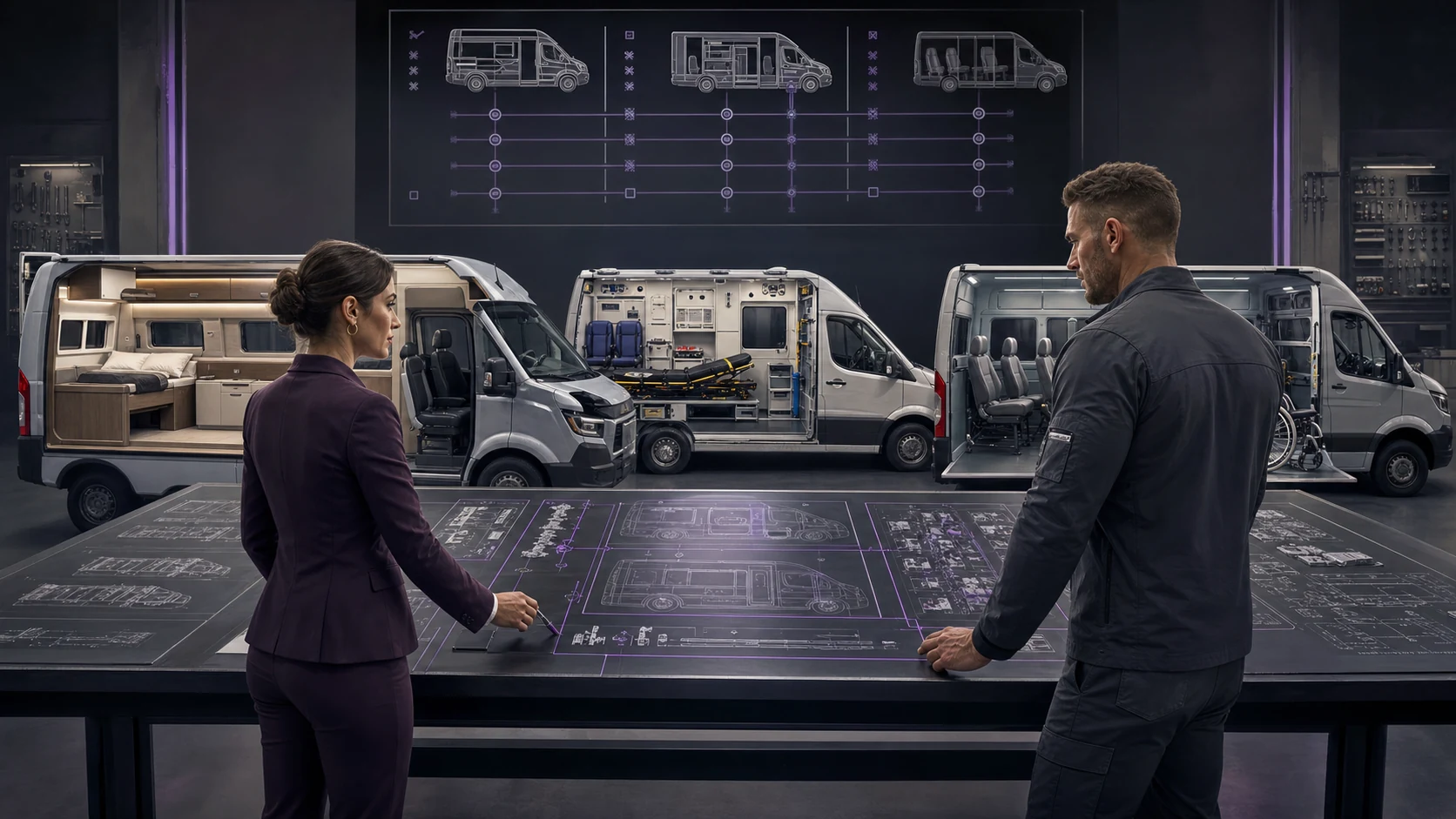
Comparison of technical-file boundaries for motor caravan, ambulance and accessible minibus variants from one base vehicle

The right process begins with the right documentation.

  • Technical file and project descriptions
  • Vehicle-conversion drawings
  • Calculations and supporting evidence
  • Implementation scope and traceability records
  • A coherent evidence structure for certification

The technical file defines how the project will be implemented, which technical evidence supports it and how the conversion will be repeated in production. Drawings, calculations, supporting documents and traceability records create a manageable certification structure.

Coordination from application to completion.

01Project Planning

Vehicle type, conversion objective, production volume and intended approval route are assessed together.

02Technical Analysis

The vehicle category, conversion scope, technical limits and conformity risks are defined.

03Documentation

The technical file, drawings, calculations and supporting evidence are planned.

04Application Management

The application structure and process stages are followed systematically.

05Technical Review

Technical questions and revision requirements arising during assessment are managed through the process.

06Post-Approval Support

Production continuity, changes and new project variants are monitored.

Every vehicle-conversion project has different requirements.

Experience in series-conversion projects means more than having submitted similar applications. It requires knowing how vehicle categories differ, where risks arise in each conversion type and where the technical file needs stronger evidence.

Accumulated experience helps us ask the right questions earlier in caravan, ambulance, hearse, M2-conversion, bodywork and special-purpose vehicle projects. For manufacturers, this means less uncertainty and tighter process control.

We manage the technical and administrative process as one.

01

Project Pre-Assessment

The vehicle type, conversion objective, production plan and technical scope are assessed before application.

02

Technical Analysis

Vehicle category, conversion effects, implementation limits and conformity risks are reviewed from an engineering perspective.

03

Documentation Planning

A requirements list and workflow are prepared for the technical file, drawings, calculations and supporting evidence.

04

Technical-File Preparation

The technical file required for series-conversion approval is structured coherently and with full traceability.

05

Application Management

Application steps, authority communications and the required file flow are managed in a structured manner.

06

Technical Process Follow-Up

Technical reviews, clarifications and revision requirements are followed throughout the process.

07

Communication Coordination

Technical communication between the manufacturer, bodybuilder, suppliers and assessment parties is coordinated.

08

Post-Approval Support

Support continues after approval for production continuity, change management and new variants.

Solutions for different manufacturer profiles.

Caravan Manufacturers

In caravan conversions, interior layout, equipment restraints, weight effects and technical-file structure must be considered alongside the production plan.

Ambulance Manufacturers

For ambulance manufacturers, specialised equipment, electrical systems and use-specific technical requirements are assessed for each project.

Hearse Manufacturers

Transport equipment, interior arrangement and post-conversion technical conformity are managed together in hearse projects.

Bodybuilders

For bodybuilders, the base vehicle, implementation scope and manufacturer responsibility must be supported by a clear technical-file structure.

Vehicle Converters

For companies converting fleets or vehicle series, repeatable implementation and traceability are central to the process.

Special-Purpose Vehicle Manufacturers

Vehicles with specialised operating scenarios require technical analysis tailored to the project mission rather than a standard approach.

Frequently asked questions about series-conversion type-approval.

The conversion, vehicle category and technical-file scope must be assessed for the specific project.

Series-conversion type-approval provides a systematic framework for managing technical conformity, documentation and certification when the same conversion is repeated across multiple vehicles.

It may apply to M2 conversions, ambulances, hearses, caravans, special-purpose vehicles, bodywork and fleet-conversion projects.

Caravan projects require coordinated planning of the base vehicle, interior layout, equipment restraints, weight effects and technical file.

Ambulance projects require a combined assessment of medical equipment, electrical systems, interior layout, restraints and vehicle category.

Hearse projects cover transport equipment, interior arrangement, effects on the vehicle body and technical conformity evidence.

Yes. We support M2 vehicle-conversion projects with technical analysis, documentation, application management and process follow-up.

The technical file shows how the conversion is performed, which evidence supports it and how it will be repeated in production.

The process should be planned before conversion begins. Early planning reduces revision risk and uncertainty.

Anemon provides project assessment, technical analysis, documentation planning, technical-file preparation, application management, process follow-up, communication coordination and post-approval support.

Yes. Pre-application consultancy helps establish the correct scope and avoid unnecessary revisions.

Your process partner for vehicle conversions.

Series-conversion approval requires production knowledge and homologation requirements to be assessed together. Anemon Engineering takes an integrated approach to technical files, certification and process management for vehicle manufacturers, bodybuilders, caravan manufacturers, ambulance and hearse projects and special-purpose conversions.

Let us assess your project together.

Let us define the technical support and roadmap your series-conversion approval requires.