Vehicle Engineering Services

Build your vehicle project on sound engineering.

Technical changes and special-purpose applications involve more than physically modifying a vehicle. Engineering assessment, project preparation, documentation and conformity procedures must be managed together. Anemon Engineering supports manufacturers and vehicle owners throughout this process.

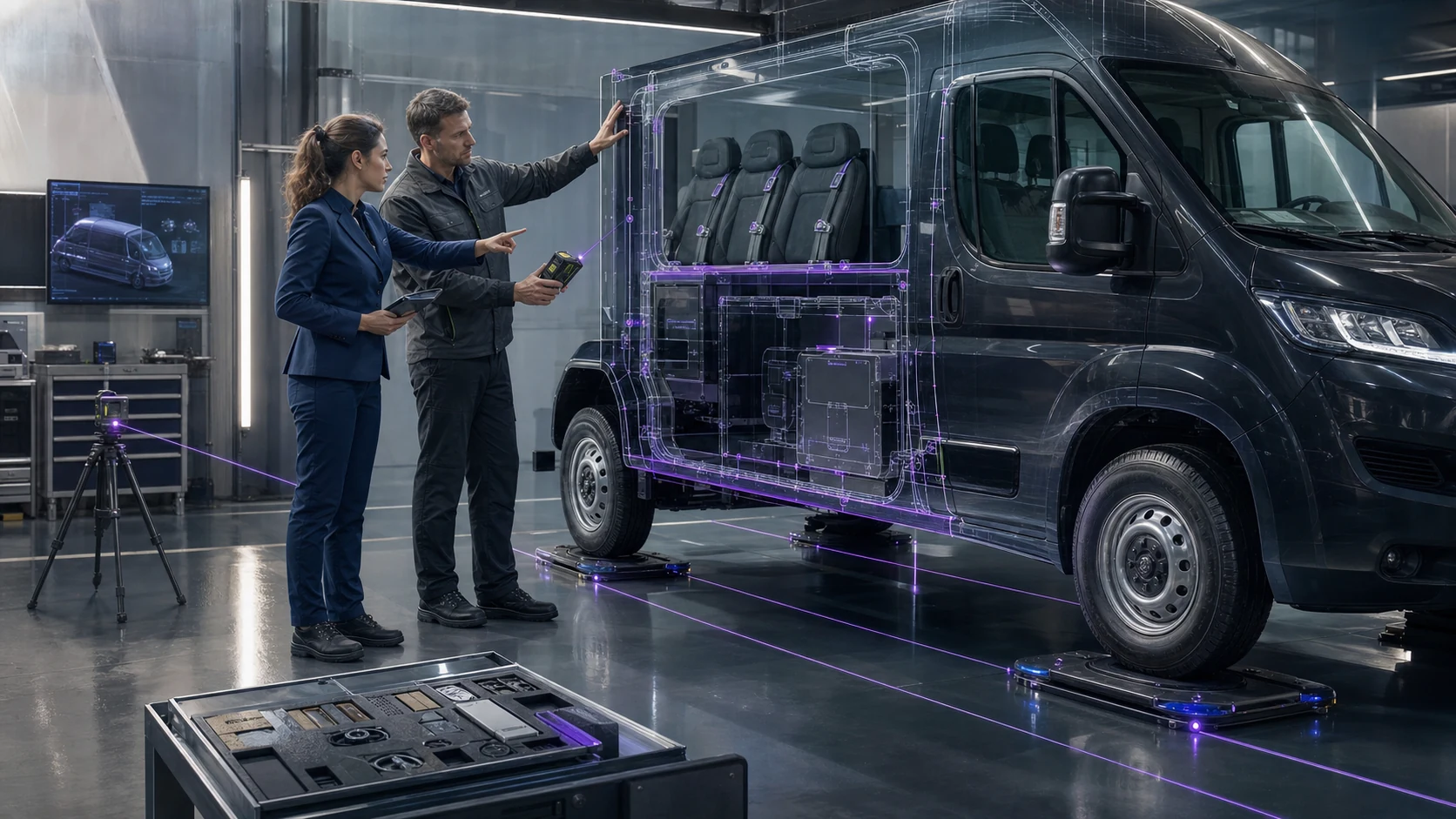
Field assessment of body aperture, seat anchorages, equipment layout, dimensions and axle loads for an individual vehicle project

Structured assessment of technical vehicle changes.

A vehicle engineering project assesses proposed technical changes or special-purpose applications and defines them through accurate documentation. Changes to interior layout, bodywork, equipment, intended use or superstructure involve more than fabrication: technical conformity, category implications, mass distribution, restraint solutions and approval requirements must be considered together.

Every motor caravan, ambulance, funeral vehicle, special-purpose vehicle, bodywork or commercial-vehicle conversion presents different technical risks. If implementation details, vehicle effects and supporting evidence are not clarified early, revision requirements can grow as the project progresses.

Anemon Engineering tailors technical assessment, project preparation, technical-file development, documentation management and process follow-up to the needs of manufacturers, vehicle owners and fleet operators.

Engineering tailored to different vehicle types.

Motor Caravan Projects

Motor caravan projects require an integrated assessment of interior layout, mass distribution, equipment restraints, electrical installations and auxiliary systems. The technical file must describe the conversion as accurately as it has been engineered.

Ambulance Conversion Projects

Ambulance conversions require dedicated engineering assessment because of their intended use, medical equipment, electrical systems and restraint solutions. Vehicle category and implementation details directly shape the project plan.

Funeral Vehicle Projects

Funeral vehicle projects must address interior layout, the transport system, equipment restraints, body effects and intended use in documentation that accurately reflects the finished vehicle.

Special-Purpose Vehicles

A standard solution is rarely sufficient for a task-specific vehicle. Equipment scope, body layout, mass implications and operating scenario are assessed for the individual project.

Bodywork Projects

Bodywork projects require a clear analysis of the technical relationship between the base vehicle and completed vehicle, the boundaries of responsibility and the effects of the work on the vehicle.

Vehicle Conversion Projects

For fleet, commercial-vehicle and private-use conversions, the effect of the change on vehicle conformity is assessed together with documentation and process management.

Successful projects begin with the right assessment.

Technical Conformity

The compatibility of the proposed change with vehicle construction, intended use, mass distribution and technical requirements should be assessed at an early stage.

Documentation

Drawings, calculations, technical descriptions and supporting evidence present the project in a clear and traceable form.

Vehicle Category

An incorrect or incomplete vehicle-category assessment can alter project scope, technical requirements and the applicable approval route.

Implementation Details

Installation, restraints, equipment positioning, electrical connections and effects on the body must be defined for the specific project.

Process Management

A planned approach to technical assessment, file preparation, communication with authorities and revision management reduces uncertainty.

Risk Reduction

Early engineering assessment reduces the risk of non-conformities, rework and delays emerging after the conversion is complete.

The foundation of a sound vehicle project.

Technical documentation is more than an application file; it is the principal record of how the conversion has been defined in engineering terms. Drawings, supporting calculations, explanatory notes, equipment data, restraint details and traceability records demonstrate the project’s technical coherence.

When documentation matches the actual work, the project is easier to understand, trace and manage. An incomplete or fragmented technical file can undermine even a correctly executed conversion during assessment.

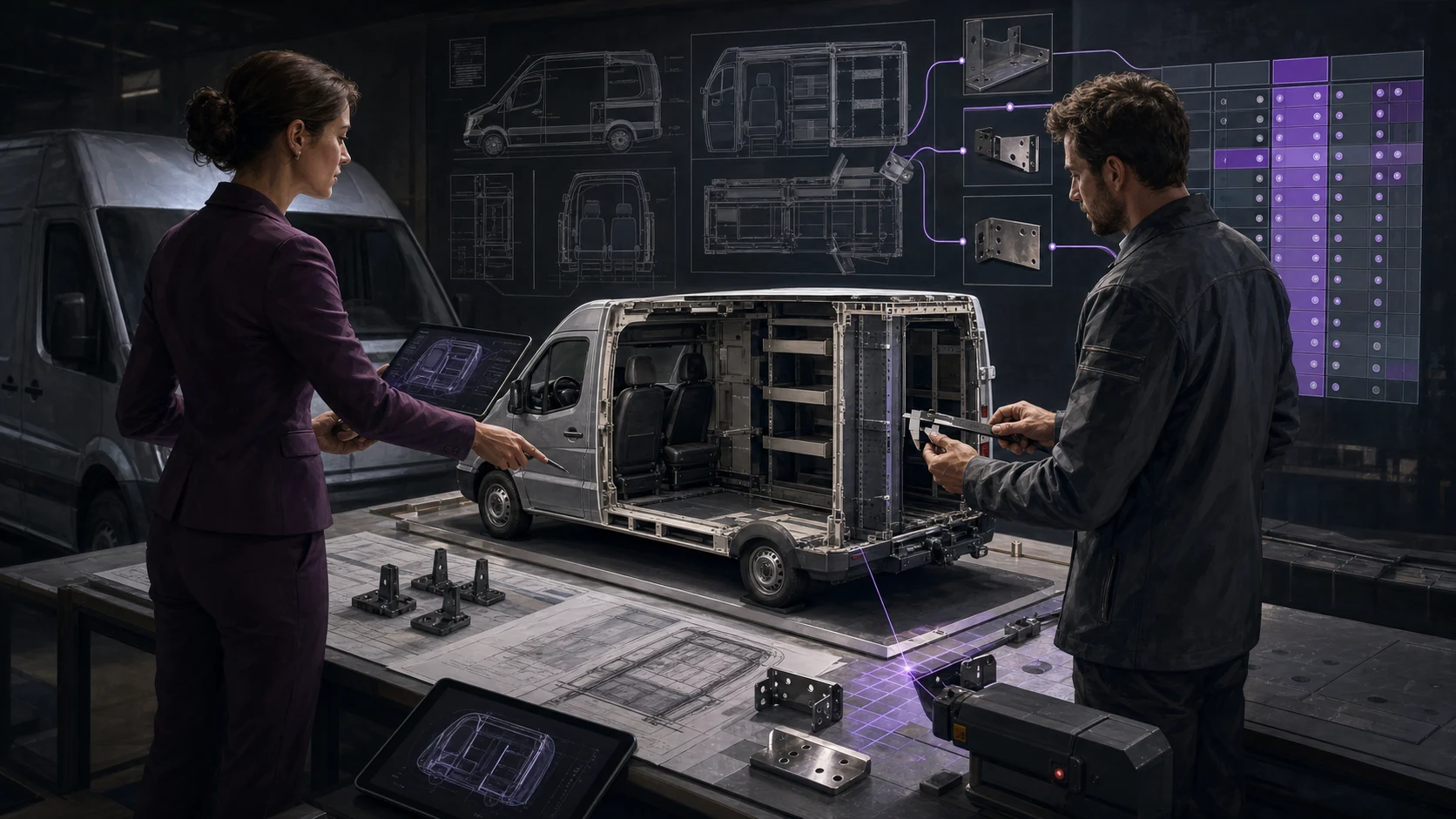
Matching measured bodywork, equipment brackets, seat anchorages and mass changes to the individual vehicle project dossier

Support for every project stakeholder.

Vehicle Manufacturers

For new vehicles, variants and special applications, engineering assessment, project documentation and conformity preparation are managed together.

Body Builders

For work carried out on a base vehicle, technical limits, effects of the conversion and documentation requirements are clearly defined.

Motor Caravan Manufacturers

Motor caravan conversions and manufacturing projects address layout, restraints, mass and technical documentation as one engineering scope.

Special-Purpose Vehicle Manufacturers

Ambulances, funeral vehicles, shuttle vehicles and other task-specific vehicles receive an engineering approach tailored to their operating scenario.

Vehicle Owners

The need for a formal project and the feasibility of proposed vehicle changes can be assessed before an application is made.

Fleet Operators

Where a conversion will be repeated across several vehicles, technical repeatability, documentation and process coordination become essential.

Making complex technical processes manageable.

01

Preliminary Project Assessment

The proposed change, vehicle type, intended use and technical scope are assessed before application. This establishes the correct framework for the project.

02

Technical Analysis

Vehicle construction, conversion effects, equipment layout, mass and technical requirements are reviewed from an engineering perspective.

03

Vehicle-Category Assessment

Vehicle category, intended use and conversion scope are assessed together to establish a clear project roadmap.

04

Technical-File Preparation

Drawings, explanatory notes, calculations and supporting evidence are prepared to represent the project scope accurately.

05

Documentation Management

Document flow, revisions, missing information and technical clarifications are managed systematically.

06

Process Planning

Application, assessment, revision and completion stages are planned together with the manufacturer or vehicle owner.

07

Technical Follow-Up

Technical questions, requests for clarification and file updates arising during assessment are managed throughout the process.

08

Post-Project Support

Technical support continues for post-approval changes, new variants and comparable vehicle projects.

Common issues that complicate vehicle projects.

Missing Technical Data

Project scope cannot be defined reliably when vehicle dimensions, equipment specifications, mass data or implementation details are missing.

Insufficient Documentation

When drawings and technical descriptions do not match the actual work, requests for clarification and revision increase during assessment.

Late Project Start

Starting project preparation after the physical work is complete can create avoidable retrospective changes and adaptations.

Conformity Issues

If a proposed change is incompatible with vehicle construction, category or intended use, technical problems become more significant as the project advances.

Revision Requirements

If the completed work and technical file are inconsistent, the project may need to be reassessed.

Poor Coordination

The process slows when technical communication between the vehicle owner, manufacturer, body builder and assessment bodies is unclear.

Every vehicle project is different.

Experience in vehicle engineering goes beyond preparing drawings or compiling a file. It requires an understanding of how vehicle category, intended use and implementation details affect the project. The same technical change can have different implications for a motor caravan, ambulance, funeral vehicle, body conversion or other special-purpose vehicle.

Practical project experience helps identify which data must be collected early, which implementation details may create risk and where documentation needs to be strengthened. This insight is essential to controlled, dependable progress.

A structured approach at every stage.

01Preliminary Assessment

The vehicle, intended application, scope of change and available technical information are reviewed together.

02Technical Analysis

The assessment covers vehicle category, the effects of the conversion, technical limits and project risks.

03Documentation Planning

The required drawings, calculations, explanatory notes and supporting evidence are defined.

04Project Preparation

The technical file, project descriptions and supporting documents are prepared as a coherent set.

05Process Management

Application, technical communication, clarification and revision stages are followed through to completion.

06Project Completion

Project deliverables, formal close-out and any required follow-up support are planned.

Frequently asked questions about vehicle engineering projects.

Vehicle conversion projects require technical assessment, implementation details and documentation to be managed as one coherent scope.

A vehicle engineering project evaluates technical changes, conversions or special-purpose applications and defines them in formal technical documentation.

Engineering projects can be prepared for motor caravans, ambulances, funeral vehicles, special-purpose vehicles, bodywork applications, commercial-vehicle conversions, fleet conversions and other technical modifications.

Motor caravan projects assess the base vehicle, interior layout, restraint details, mass distribution, equipment scope and technical-file structure together.

An ambulance engineering project covers medical equipment, electrical systems, interior layout, restraint solutions and vehicle category as one technical scope.

Yes. For vehicles with a special-purpose designation, equipment scope, effects on the body, technical conformity and documentation are assessed for the specific project.

The technical file records how the work was carried out, which technical data support it and how conformity was assessed.

Project preparation should begin before work starts or conversion decisions are finalised. Early assessment reduces the need for revisions after implementation.

Vehicle category affects technical requirements, permitted modifications, documentation scope and process planning. It must therefore be established correctly at the start of the project.

Anemon Engineering provides preliminary project assessment, engineering analysis, vehicle-category review, technical-file preparation, documentation management, process planning, technical follow-up and post-project support.

Yes. A preliminary assessment can establish the technical scope and identify potential process risks before work begins.

A dependable engineering approach to vehicle projects.

Reliable vehicle-project outcomes depend on collecting the right technical data, assessing the proposed work realistically and aligning documentation with the actual conversion. Anemon Engineering combines engineering assessment and process management for vehicle manufacturers, body builders, converters, fleet operators and vehicle owners.

Our approach goes beyond compiling a file: we first understand the engineering challenge and turn it into a practical roadmap. Long-term technical support, change management and continuity of knowledge across similar projects are therefore integral to our work.

Let us assess your project together.

Let us define the technical support and project roadmap required for your vehicle conversion or special-purpose vehicle project.